F.X. Mayr Croatia

How our bodies change from 0 to 80 – and why most people eat wrong

In this guide, we walk through the life span from 0 to 80+ years and show how the body's needs change, where emotional triggers arise, and how FX Mayr + the kinesiology approach restores balance at each stage.

The body changes – but our habits often stay the same.

What once went unnoticed at age 20 can gradually lead to issues such as bloating, fatigue, weight gain, hormonal imbalance, and reduced strength and energy. Most people aren’t overeating – they’re simply eating out of alignment with their stage of life.

In this blog, we go through the lifespan from 0 to 80+ years and we discuss:

  • how our nutritional needs change
  • how emotional eating patterns develop
  • what kind of movement the body actually needs at a certain age

Everything through the lens of the FX Mayr method and kinesiological approach.

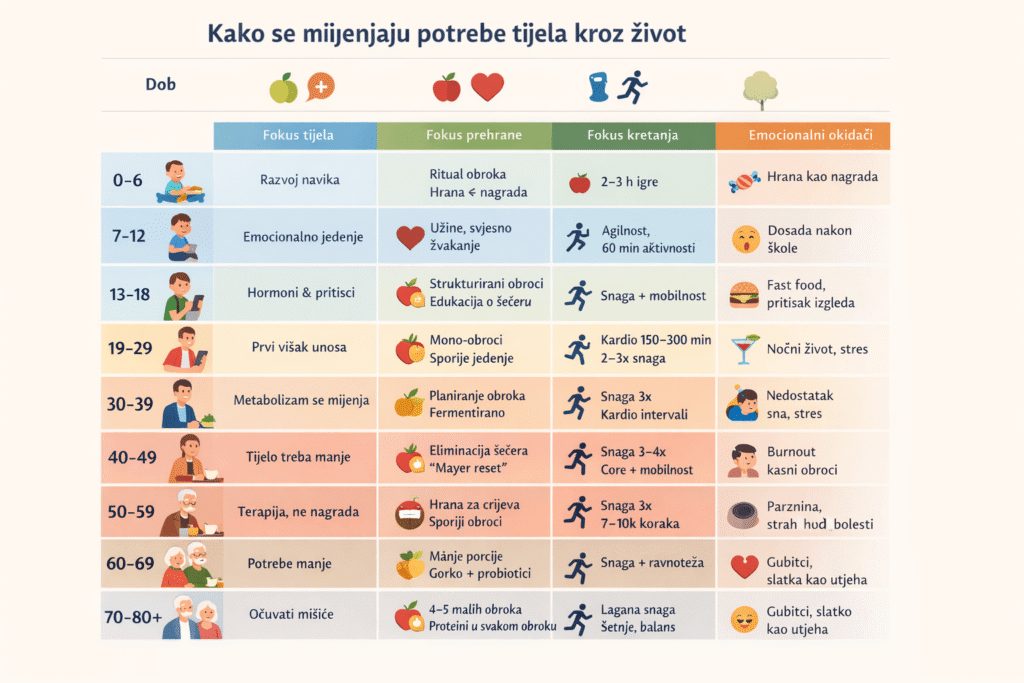
CHILDHOOD (Ages 3–6)

Here, we don’t focus on calories – we focus on the relationship with food.

Emotional triggers

  • “Be good, and you’ll get a treat.”
  • Food as a reward and a proof of love
  • Attention = Food

FX Mayr Focus

  • Meal ritual at the table
  • Learning the feeling of fullness
  • Food ≠ Reward

Body movement

  • 2–3 hours of free play per day
  • Jumping, running, climbing, coordination

⚠️ Common mistake: this is where the pattern of emotional eating develops, which later simply “transforms” into its adult form.

CHILDHOOD (Ages 7–12)

The start of automatic eating

Emotional triggers

  • Boredom after school
  • Bakeries and sweets “on the go”
  • Feeding out of love

FX Mayr Focus

  • Simple, structured snacks
  • Mindful Chewing (15–20 times)
  • Breaking the habit of constant snacking

Body movement

  • The best period for developing agility
  • 60 minutes of daily structured activity

ADOLESCENCE (Ages 13–18)

Hormones, Stress, and Chaotic Habits

Emotional triggers

  • School and identity stress
  • Peer influence + fast food
  • Energy drinks
  • Pressure to look a certain way

FX Mayr Focus

  • Structured meals (3 main meals)
  • Learning about sugar and dopamine
  • “Light Mayr Day” once a week

Body movement

  • 4–5 workouts per week
  • Strength + mobility
  • Posture correction (phones, screens)

YOUNG ADULTHOOD (Ages 19–29)

The first major excess intake

Emotional triggers

  • College, work, irregular meals
  • Night out → alcohol + fast food
  • Food as a reward for stress

FX Mayr Focus

  • 1–2 days of simple foods
  • No nighttime eating
  • Warm water + bitter in the morning
  • Mindful, slower eating

Body movement

  • 150–300 minutes of cardio per week
  • 2–3 strength training sessions
  • 10 minutes of mobility daily

ADULTHOOD (Ages 30–39)

Metabolism changes, but habits remain

Emotional triggers

  • Lack of sleep
  • Stress and the “I deserve It” pattern
  • Evening overeating

FX Mayr Focus

  • Weekly meal prep
  • Fewer carbohydrates in the evening
  • Fermented foods + bitter
  • Slow down eating pace

Body movement

  • Strength training 3x per week
  • Interval cardio
  • Walks after meals

MIDDLE AGE (Ages 40–49)

The body needs less, life demands more

Emotional triggers

  • Chronic stress and burnout
  • Late-night emotional eating
  • Decrease in physical activity

FX Mayr Focus

  • Elimination of sugar and liquid calories
  • Mayr Reset (7–10 Days)
  • Stable meals: hearty breakfast and lunch, light dinner

Body movement

  • Strength training 3–4x per week
  • Cardio zone 2
  • Core and mobility

MATURE ADULTHOOD (Ages 50–59)

The body needs therapy, not a reward

Emotional triggers

  • Children Leave → emptiness
  • Food as company
  • Chronic fatigue

FX Mayr Focus

  • Support for the gut and liver
  • Slower meals
  • Avoiding dairy and gluten for bloating

Body movement

  • Strength training 3x per week (key focus)
  • 7–10 thousand steps per day
  • Light cardio

OLDER ADULTHOOD (Ages 60–69)

Needs are lower, habits remain the same

Emotional triggers

  • Loneliness
  • Eating out of routine
  • Medications and digestion

FX Mayr Focus

  • Smaller portions, higher quality
  • Bitter + probiotics + warm water
  • No snacking on the go

Body movement

  • Strength training with lighter loads
  • Walks
  • Balance training

70–80+ years

Preserve muscle mass and digestive health

Emotional triggers

  • Loneliness
  • Loss of appetite or excessive sweet cravings
  • Poor oral function

FX Mayr Focus

  • 4–5 smaller meals per day
  • Protein in every meal
  • High hydration

Body movement

  • Light strength exercises
  • Balans
  • 20–40 minute walks

Why is this important?

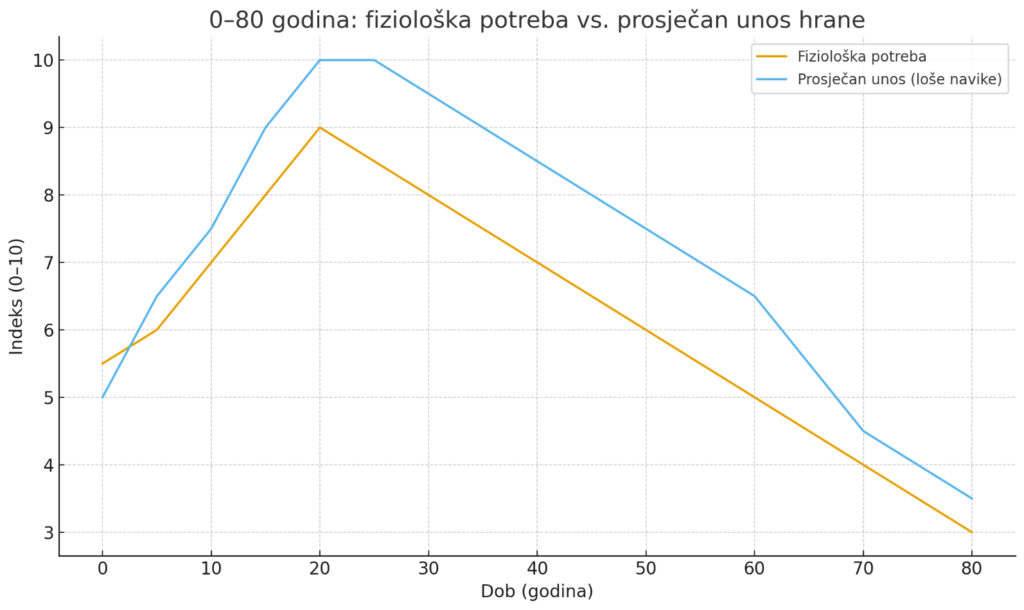
Because most modern health problems — from bloating to visceral fat — occur because we eat as if we were 20 years old, but move as if we were 80.

The FX Mayr method combined with a kinesiology approach:

  • resets digestion
  • reduces inflammatory processes
  • regulates appetite
  • calms emotional triggers
  • restores strength and energy

Would you like to analyze your "gap"?

The difference between what your body needs and what you are currently giving it.

An FX Mayr consultation provides a personalized plan for nutrition, digestive reset, and movement – tailored to your age, lifestyle, and your body’s real needs.


You might also be interested in:

How to manage energy, health and longevity – as the CEO of your own home

People invest in knowledge...
How to lose weight healthily with a permanent change in eating habits

In a world of crash diets and aggressive methods...

Imate pitanje za nas?

Kontaktirajte nas, brzo i jednostavno!

Rezervirajte svoj termin za F.X. Mayr program

Fill out the form and start your F.X. Mayr program – simple, safe, and with professional support.